Showing posts with label asking for it. Show all posts

Sunday, 29 November 2015

Review: Asking For It: The Alarming Rise of Rape Culture and What We Can Do About It by Kate Harding

Asking For It by Kate HardingAsking For It: The Alarming Rise of Rape Culture and What We Can Do About It by Kate Harding (proof) - Dominique Strauss-Kahn’s arrest. Congressman Todd Akin’s "legitimate" gaffe. The alleged rape crew of Steubenville, Ohio. Sexual violence has been so prominent in recent years that the feminist term "rape culture" has finally entered the mainstream. But what, exactly, is it? And how do we change it?

In Asking for It, Kate Harding answers those questions in the same blunt, bullshit-free voice that’s made her a powerhouse feminist blogger. Combining in-depth research with practical knowledge, Asking for It makes the case that twenty-first century America—where it’s estimated that out of every 100 rapes only 5 result in felony convictions—supports rapists more effectively than victims. Harding offers ideas and suggestions for addressing how we as a culture can take rape much more seriously without compromising the rights of the accused.
From Goodreads.

Asking For It: The Alarming Rise of Rape Culture and What We Can Do About It by Kate Harding, is, as you can probably tell, non-fiction. It's not YA non-fiction either. Technically, it doesn't work for Sex in Teen Lit Month II, but seeing as the last week and a half has been focused on sex crimes in YA, rape in particular, I thought this was an ideal time to review it.

This book. This. Book. I cannot even begin to tell you how incredible it is. With all the YA novels on rape and rape culture I've been reading recently, I thought I had a pretty good grasp on what constitutes rape, but I had my eyes opened by Asking For It in so many ways.

Before reading, I was slightly worried Asking For It would be quite an academic text, and one I would struggle to get my head round. But it's not, it's so accessible, I had no problem understanding anything Harding explained. Considering people tend not to understand exactly what constitutes as rape and who is at fault, Asking For It being so accessible is fantastic, because you're left without any doubt whatsoever. Harding tells us, "These are the facts, these are the figures, this is the law - this is rape," with a voice that is angry, using sarcasm to illustrate her points.

Harding talks us through the seven different rape myths that are behind rape culture, and throughout the book we are shown how these myths have formed part of society's consciousness, and have, time and again, caused us to lay blame for so many rapes and sexual assaults at the feet of the victims. We're shown actual cases and how they were dealt with by the police, by defence attorneys, in court rooms. Harding even covers how American  pro-life politicians have discussed rape and just how badly they have got it wrong, as well as false accusations, how we tell women to protect themselves to protect rape and sexual assault but don't tell men not to rape, how TV shows, the media and pop culture talk about or represent rape and sexual assault, and even trolls and Gamergate.

I can't review this book with any kind of justice. Not only because I have a proof I'm unable to quote, but also because I just want to discuss every aspect of this book, and you're better off just buying it and reading it yourself. This is a book that really should be read by everyone; men and women; teenagers and adults; police, lawyers, judges; those who might some day be sitting on the jury for a rape/sexual assault (i.e. again, everyone), journalists, TV and movie writers. Everyone. If we all read this book, if we all understood exactly what constitutes as rape, if we understood how and why society shouts down the victims almost every time a rape is reported, if we understood why so few victims report rape, why so few of the rapes reported are convicted, perhaps this would all change.

Asking For It is just one book (and Harding does discuss others on rape and sexual assault), but it's a book I feel really could create change. You really should read this book. Rape and sexual assault survivors need you to.

Thank you to Da Capo Lifelong Books for the reading copy.

Add to Goodreads

Buy from:
Wordery


Published: 27th June 2015
Publisher: Da Capo Lifelong Books
Kate Harding's Website

Thursday, 26 November 2015

Sex in Teen Lit Month II - Discussion: Paul & Emma's Scene in Asking For It by Louise O'Neill

Asking For It by Louise O'NeillWARNING! There is a scene in Asking For It by Louise O'Neill that I am going to discuss in some detail. If you have yet to read the book and don't want it spoilt for you, please read no further.

After reading Louise O'Neill's Asking For It, people talk about the gang rape of Emma. We don't see this rape as Emma, our narrator, is unconcious when it happens and has no recollection. But there is another rape, one that is on the page, that happens minutes before the gang rape. Except it doesn't seem to occur to a lot of people that this scene is rape, or when the conversation is brought up about the first rape scene, they deny it is rape.

Louise O'Neill has discussed how people see this scene - how some have even related to it, but don't see it as rape. Louise relays to Stuff that she has been told by people about their own experiences, "It wasn't rape, but it wasn't right."

I've even had a discussion about this very topic. And so I thought I would share with you why I instictively saw this scene as rape. Before we get into it, if you have a copy of Asking For It, dig it out and re-read pages 106-107 and refresh your memory of this scene. Done? Now look at this.
'"Maybe we should..." I try and swallow, but my mouth is too dry. "Paul, maybe we should go back to the party."
"Don't be silly," he says. (I brought him in here. This was my idea.) "Don't be a fucking cock-tease."
"Wait," I try and say. "Wait, I don't feel..."
But he pushes me back down, yanking my underwear aside, and he's inside me, and I'm not ready and it hurts...'
(p107)
There are few things I want to point out about the above extract:
  1. By his very response, we know he doubts she wants to go through with this.
  2. She says "Wait". She tells him to wait.
  3. He doesn't wait. He doesn't let her finish her sentence. He doesn't give her the chance to withdraw her inital consent before he's pushed her down and forced himself inside her. And yes, I say "forced" because she's not ready - she's not turned on and lubricated enough, but she's also not ready because she said "Wait."
Emma doesn't react to being raped how you might expect her too; she doesn't thrash, she's not frozen. But I'd like to point out that there's no correct way to react. The text becomes run on sentences which show her panic and, I believe, her shock. Which is why she's thinking about condoms, and thinking about a boy in the photo. Her moan - her fake moan - might seem problematic but again: there is no correct way to react. She just wants him to stop, and she thinks moaning will make it end sooner. You might say Paul is not a mind reader and doesn't know what's going on in Emma's head, but he already knows she doesn't want this, because his belief that she doesn't is what prompted him to say "Don't be a fucking cock-tease,", but also because she said "Wait."

Yes, she did bring him in there, it was her idea, but she still said "wait" and was ignored. "Wait" might not be No, or Stop, or I don't want to, but it's a clear indication of not wanting to go forward with having sex right now. And yes, not right now might mean later, but it still means not now. And he goes ahead anyway. If a guy/woman has any doubt that someone doesn't want to go forward and having sex, they should not go forward with having sex themselves without first finding out if they have permission to. If they do doubt someone wants to go forward, and they go forward anyway, they are a rapist.

If you discount the gang rape that happens after - imagine it didn't and focus on this scene alone: Paul raped Emma. This is rape.

Talk to me. How did you initally react to this scene? If you didn't originally think Paul was raping Emma here, has this post changed your mind? Or do you still have the same opinion? Let's discuss!

Sex in Teen Lit Month II: Interview with Louise O'Neill

Today, we are extremely lucky to have the completely brilliant Louise O'Neill stopping by, who has been incredibly busy lately (she's been at events in Ireland, the UK, the US, and Canada, all in a matter of months!) due to the success of her two novels. She's here to discuss her latest novel Asking For It and to talk about rape culture.

Louise O'NeillAsking For It is such a deeply affecting and eye-opening novel. What prompted you to write it?

There were a few different reasons. I was finishing Only Ever Yours in 2012 when Todd Aiken, a politician who was running for senate in the US, made a comment about how the female body had ways of ‘shutting down’ a pregnancy if it was a ‘legitimate rape.’ I wanted to include that idea of ‘legitimate rape’ or ‘rape rape’ in Only Ever Yours but it seemed too important an issue to shoe-horn in to the narrative.


The Steubenville case and the Maryville case in the U.S both horrified and fascinated me but it was after the Slane Girl incident here in Ireland (in which a teenage girl was caught on camera performing oral sex on a number of men at a music concert and was vilified by the media) that I knew I wanted to write about this topic. Although the Slane Girl case wasn’t about rape, it just highlighted for me the disparity between how we view male and female sexuality and how misogynistic that was.

We normally think of sex as a loving and/or fun thing. Can you tell us what it's like for Emma when she realises what happened to her, that sex was used to hurt her? Not remembering, but seeing those photos?

Emma’s initial reaction is utter panic, not at that fact that she’s been raped but because of how humiliated she feels. The shaming that she receives from her peers and her community is actually far more damaging to her than the act of sexual violence. Of course this wouldn’t be the same for all victims but for Emma, a girl who has been brought up to believe that how she is perceived is far more important than her own internal feelings, this is soul destroying.

Asking For It isn’t just the story of Emma’s rape, but also of how she’s treated afterwards, how she’s affected by rape culture and victim blaming. It was astonishing and heart breaking to see just who sided with the rapists – and even how people changed and treated her differently, even if they didn’t come right out and blame Emma.

None of us exists in a vacuum. We have been brought up in a deeply patriarchal society in which men and the male voice are given much more authority than the female. Because of this, (And studies on unconscious bias would corroborate this) most people are much more inclined to believe that men are the truth tellers because they are logical and rational. Women, in comparison, are seen as over emotional, too sensitive, likely to overreact. Is it any wonder then that women are so often doubted when they say that they have been raped?

Women are also held up to much higher moral standards than men and nowhere is this more obvious than when it comes to sex. Boys will be boys, we are told, they just can’t help themselves. Women must be the gatekeepers, they must protect their modesty and their virtue.

It’s all complete bullshit, of course, but when you’ve been fed this narrative time and time again since birth, it’s difficult to reject.

I was amazed by the comments from strangers - who heard about "the Ballinatoom Case" through TV/radio/newspapers - who blamed Emma,  even though they didn't have the full details. And the excuses – she was drinking, she was on drugs, she was wearing a short, low-cut dress – she was asking for it. The sympathy from these people - people so far removed from it all - for the rapists whose lives were being "ruined" was astonishing.

Asking For It by Louise O'NeillThis is rape culture. The rush to protect the perpetrators and to heap blame on the victim is abhorrent but it happens all the time. Some of this is because I think many people simply don’t want to believe that such a horrific crime has happened and are hoping that the victim may be ‘confused’. The rape prevention programs that have focused on measures women need to take to protect themselves also play a part. Although trying to help, they have reinforced the idea that women need to be the ones to prevent rape from happening. The natural extension of that is the idea that if and when rape does occur, there must have been something that the victim could have done to prevent it.

How does rape culture and victim blaming make Emma feel about sex and her own sexuality?

Emma has always viewed sex and her own sexuality as a way of controlling how other people see her, particularly men. Sex is a performance for her, she is more concerned with how she looks and if her partner is having a good time, she never stops to consider her own pleasure.

I finished this book feeling angry, scared, and so upset. But I also felt the urge to do something, to fight back. Is there anything you would suggest the average person can do to fight against rape culture and victim blaming?

We need to share our stories. So many people have been the victims of sexual assault or unwanted touching but we have been too ashamed to speak out for fear of being shamed. The more we talk about it, the more we will realise that we are not alone, that this problem is epidemic and that we NEED to work together to fix it.

Also, if a friend tells you about their experience of sexual violence – believe them, unequivocally.

What research did you do for Asking For It? Was there anything that surprised you?

I visited the Rape Crisis Centre in Cork, I spoke to victims of sexual violence, I read memoirs and first person accounts of survivors. I spoke to people working in education and in law, I asked a barrister who specialises in these type of cases to read a proof of the book to ensure I hadn’t made any glaring errors.

The things that surprised me the most were to do with the Irish legal system which seemed to me to be designed to ensure that a victim would rarely if ever find justice.

What do you hope readers get from Asking For It?

I want the reader to finish this book and to be absolutely FURIOUS. I believe that this anger is the only way we will enact any real change.

What do you think about how teen fiction deals with sex, generally? And sex crimes in particular?

I know it’s a bit hypocritical of me to say but I want more teen fiction where sex is enjoyable and the participants don’t endure any horrific consequences. We also need to see more masturbation – particularly with teenage girls! (I, Jo, wrote about the lack of positive scenes of female masturbation in YA for Sex in Teen Lit Month II!)

Thank you, Louise, for such fantastic answers! What do you think of the points Louise has brought up? What did you think of Asking For It, and the light it shines on rape culture?

Be sure to check out Louise's website, and my review of Asking For It.

Also: Louise said we need to share our stories. I did this back in May; Don't Dismiss Your Pain: On Sexual Assault and Rape. I'm putting out a call for any sexual violence survivors who feel comfortable enough, to write on their blog about their experience, and tweet me or post a link to your post in the comments. Let's raise our voices and speak up.

Thursday, 3 September 2015

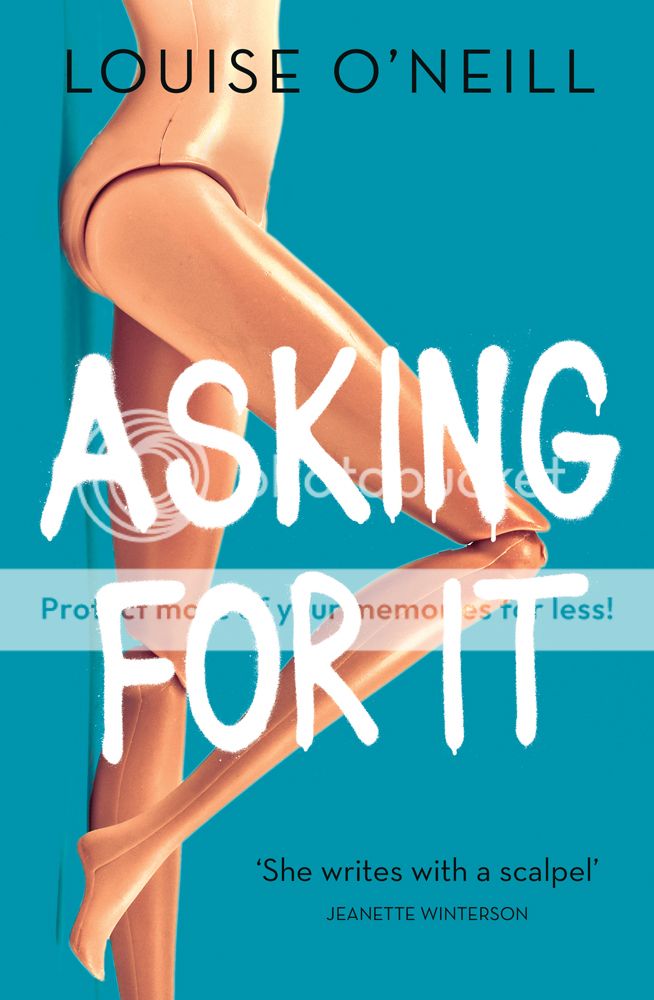
A Novel Cover Up: Kate Gaughran on Asking For It by Louise O'Neill

A Novel Cover Up

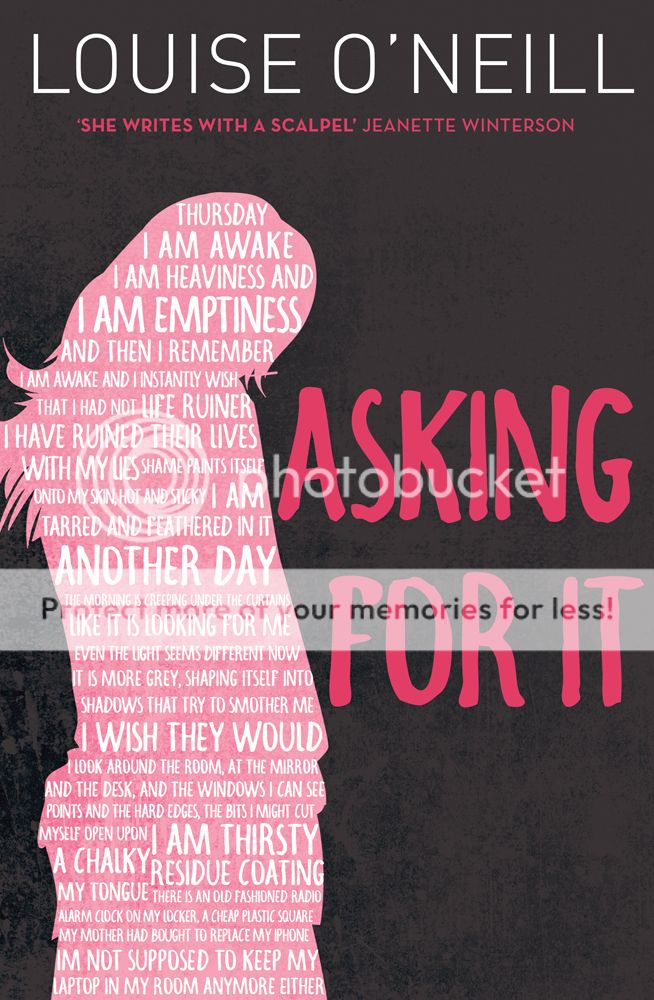
A Novel Cover Up is a semi-regular feature that looks at how covers are made. Thanks to Quercus, I have been fortunate enough to interview freelance designer Kate Gaughran about how she designed the cover for Asking For It by Louise O'Neill. Other than the cover, all images in this post are copyrighted to Kate Gaughran and used with permission. They can be clicked to be enlarged.

Asking For It by Louise O'NeillCan you tell us about the cover for Asking For It? What do you hope it tells readers about the story?

In the story 18-year old Emma, the protagonist, is taken advantage of at a party, and becomes the subject of victim blaming. She is treated badly by everyone and becomes caught in a media storm after images of the incident are widely shared on social media. With the cover I was trying to capture how she has been stripped bare physically and emotionally, and is treated almost like a rag doll. I wanted to create a cover that suggested a cold, clinical, and de-humanising situation, something that tries to reflect both how Emma feels and is treated in the story.

The cover for Asking For It ties in quite well with Louise O’Neill’s debut novel, Only Ever Yours, with both featuring a doll. Was the tie in intentional, a way to “brand” O’Neill’s books?

Absolutely – I think there was an opportunity to build on the success of Only Ever Yours and to continue establishing Louise as a great author. Only Ever Yours is such a strong cover, we wanted to do something just as striking and for Louise’s readers to recognize Asking For It as her next novel.

How did you come up with the idea for the cover?

Louise’s editor had a few ideas that she wanted me to try, and for it to somehow tie in with Only Ever Yours. The idea of a doll’s body was suggested, so that was my starting point. I tried a number of approaches using different dolls in various poses, different crops, colours, and type-styles, before eventually landing on this one. I chose the blue as I wanted to use a strong colour that wasn’t girly, and felt that the blue had the right mood to it. I wanted it stand out, be something people would want to pick up.

What were you given to base your ideas on? Did you have a manuscript, or were you given an outline?

Both, I was given part of the manuscript and an outline. I always try and get my hands on the manuscript before designing a cover. It really helps for me if I can read some of the story to understand what it's really about and get a feel for the writer's style and voice. There might be one tiny detail that you come across that gives you the inspiration for a potentially great cover.

What went into creating the Asking For It cover? Can you tell us about the process? Who else was involved?

The editor’s brief was very clear, and Louise’s writing is so powerful, that the ideas for this one came quickly. I played around with different styles of typography in Photoshop. Sometimes you might use bits of your own photography or sketches, but for this one Photoshop was what I needed to create the look I wanted. I then sent a few ideas over to the editor, which she shared in-house to gather some feedback. They chose their favourite one and then it was a matter of trying out different type styles. I initially went for graffiti-style type, but it wasn’t quite working.

Asking For It Early Draft

We ended up going for a more simple look, which tied in more with Only Ever Yours and cemented the cold and de-humanising feel we were aiming for.

What do you like most about this cover?

I like the boldness of colour, the cold typography and the simplicity of the doll. I think it communicates a strong idea about the book without giving away too much. I also like the crop of the doll, which adds a little bit of intrigue.

Were there any other early ideas for the cover? Why didn’t they make it?

Yes – I had another idea with a close up of a doll’s lips, another of a doll’s torso and another different silhouetted idea.

Asking For It Early Draft Asking For It Early Draft Asking For It Early Draft

Asking For It Early Draft Asking For It Early Draft Asking For It Early Draft

They're all part of the process of coming up with that final idea. You try different things, get feedback from people and it leads you towards coming up with the cover that sums up the story best. In this case it worked really well, leading to a cover that I think has a striking boldness and simplicity.

Thank you, Kate, for such a great interview! Kate Gaughran has been working as a graphic designer for over 12 years. She was an album cover designer at EMI Records before moving into the world of book design at HarperCollins, William Collins and Fourth Estate. For the last two and a half years Kate has been freelance, designing book jackets for lots of different publishers. You can see more of Kate's work on www.kategaughran.com.

I do love the cover we have for Asking For It, but isn't the draft with the doll's lips really striking?! Reminds me slightly of the adult cover for Only Ever Yours, with the glossy lips - though it does put me in mind of more of a steamy novel. The doll's torso drafts are also pretty woah, I think. The silhouettes give the sense of not being seen, but also wanting to hide that Emma feels in the books. But I really think the actual cover is the best fit! What do you think? Which draft/cover do you like most?

Be sure to check out Kate’s website and Asking For It, which was published today - you can read my review here.

Enjoyed this post? Then check out the previous A Novel Cover Up posts.

Thursday, 6 August 2015

Review: Asking For It by Louise O'Neill

Asking For It by Louise O'NeillAsking For It by Louise O'Neill (proof) - It's the beginning of the summer in a small town in Ireland. Emma O'Donovan is eighteen years old, beautiful, happy, confident. One night, there's a party. Everyone is there. All eyes are on Emma.

The next morning, she wakes on the front porch of her house. She can't remember what happened, she doesn't know how she got there. She doesn't know why she's in pain. But everyone else does.

Photographs taken at the party show, in explicit detail, what happened to Emma that night. But sometimes people don't want to believe what is right in front of them, especially when the truth concerns the town's heroes...
From Goodreads.

Before I start this review, I feel I should give some context about my love of Louise O'Neill's first book, and my anticipation for this one. People who follow me on Twitter and Once Upon a Bookcase will know by now what a huge fan I am of O'Neill's debut novel, Only Ever Yours. It affected me hugely, and I still rave about it to anyone who will listen, almost a year after first reading it. Even now, I'll remember something I read in those pages and something new will occur to me, making me think. Reading Only Ever Yours was a major turning point for me in terms of understanding society's treatment of women, and put me firmly on a feminist path. It blew me away, and I will continue to push it into the hands of everyone I can for being such a important, powerful and brilliant novel.

So you can understand how I have been eagerly waiting for Asking For It, O'Neill's second novel. I have just finished, and there are no words to describe how in awe I am of O'Neill. Asking For It is even more incredible than Only Ever Yours.

When Emma attends a house party, she expects it to be just like any other. She'll drink, she'll dance, she'll have fun, and she will be the most beautiful girl there. Girls will be jealous, and boys won't be able to take their eyes off her - as it is where ever she goes. She can have her pick of any of the boys, and that's just how she likes it. What Emma doesn't expect is to wake up the next morning on her front porch with no recollection of the events of the night before or how she got there. She doesn't expect her best friends to turn their backs on her. She doesn't expect the looks, the whispers, the malicious disgust-filled slurs thrown at her from everyone at school. She doesn't expect the photos, the explicit, degrading photos, that appear on Facebook. And, as she discovers what happened to her, the last thing Emma expects is for complete strangers to lay blame at her feet.

Asking For It is split into two parts; the first, the days leading up and immediately after the rape, and those same days a year later. I did not like Emma, but I could see the reasons for her being as she was. She had been brought up being told she was beautiful. Everyone told her so. Her mother ingrained it into her that being beautiful was important, and so her sense of worth was based on how she looked. Therefore she must be the prettiest at all times, and others must think she's the prettiest - she must be wanted, must be desired. Not only does she feel entitled to the attention she receives, but she needs it - who is she otherwise? I did not like her. But after she's raped - the rape she can't remember - she completely changes, becoming a mere shell of who she used to be. Despite how much I disliked her, it was unbelievably heartbreaking to see this change.

When Emma - and us readers - discover what happened to her, it's horrific. Realising that she was violated, raped, but also that photo after photo after photo was taken of her while it was happening, that these photos were put online, that everyone had seen them, and people were leaving such disgusting comments about her, about her body... being with her for this is so unbelievably hard. My heart bled for her, and I was feeling so much I had to stop reading. It was so painful, it was raw.It hurt so much, I was beyond being able to cry. I just sat there struggling with this unimaginable situation Emma was in, as her whole world crumbled at her feet.

And then things got worse. Not only did this happen to her, not only were those photos taken and seen by everyone, people blamed her. At the time it happened, and a year on. Emma made some bad decisions; she drank excessively and she took drugs. Because of this, and the short and low-cut dress she was wearing, people blamed her for what happened. The overheard conversations, the comments on the photos, the emails she was sent. The people discussing the "Ballinatoom Case" online, on radio, on TV, in newspapers. What did she expect? She was asking for it. The rage I felt! No-one seemed to realise that it doesn't matter what she was wearing, how much she drank, that she took drugs. No-one seemed to realise that she should be able to do these things without fear that she would be attacked and have control of her body taken away from her. The disgusting things people said, the excuses they made for Emma's attackers, the sympathy they had for them. Even the system, which seems to go in favour of the rapist than the victim! I got so angry! Then I got so scared, so, so scared. This is a story, fiction - but it's not. This happens; people are raped, and then they are sometimes blamed. People side with the guilty. Normal, every day people side with the rapists.

Reading about the immediate aftermath of Emma's rape was bad enough, but seeing how she was being treated a year later, the brilliant light O'Neill shines on rape culture... it's terrifying. Because you hear about it, and you know how disgusting it is, but until you see it through the eyes of the victim, I don't think we can really understand. And my heart broke. For Emma, for everyone who has been through this, for everyone who chose to suffer in silence rather than be on the receiving end of all this... . For everyone who has had the control of their body forcibly removed from them, degraded, violated, and told it was their own fault. The anger, the fear, the sadness. It's almost enough to make you lose hope in humanity.

But then you have O'Neill, and people like her, who give you hope by doing what they can to fight against rape culture. I have absolutely no doubt that Asking For It will do just what Only Ever Yours did. People will buy it, read it, talk about it... and it will make people think. It will open people's eyes. They will be as deeply affected as I have been. They will also get angry - because there is no-way anyone can read this and not get angry - and Asking For It will spread like wildfire. Because it's undeniably important and unbelievably powerful. And I believe, while it spreads, Asking For It will change lives.

Thank you to Quercus for the proof.

Add to Goodreads

Buy from:
Foyles


Published: 3rd September 2015
Publisher: Quercus
Louise O'Neill's Website